Non solo presenza, ma partecipazione
L'alunno F. è uno studente di quarta elementare. Dal momento in cui la incontri, capisci lo sforzo che fa ogni giorno per soddisfare le richieste della scuola.
Leggi o ascolta la sua storia qui, oppure scarica il riassunto e l'analisi in PDF.
For F., parential pressure often translates into fatigue and fear of failure. She is growing up where physical limitations, social isolation, and high expectations coexist.
Her story highlights the importance of meaningful inclusion, empathy, and collective responsibility on the part of the school, family, and society to ensure she can participate fully.
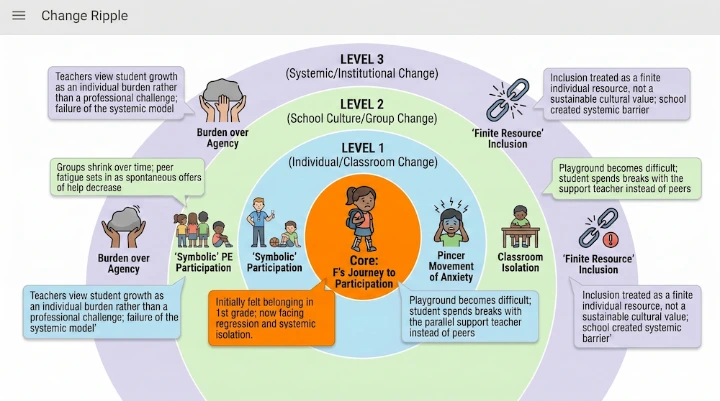
Physical education and school trips are the most demanding. Activities are often not adapted, leaving her participation symbolic. Teachers sometimes express hesitation to accompany her, stating she has "grown up" and is physically harder to support.
In the family environment, her parents have high expectations, viewing academic success as a way to "compensate" for her difficulties.
In later years, the atmosphere changed. As children grew older, groups shrank and classmates seemed to "get tired" of helping. Offers of help became fewer, and F. began to spend more breaks in the classroom.
The playground became a difficult place, full of movement and games in which she could not participate equally.
F. has mobility difficulties, wears braces, and needs physical support to move safely. She relies heavily on the adults around her. She has a twin sister with ADHD, but no mobility problems, which sometimes creates difficult comparisons.
When F. joined first grade, the atmosphere was encouraging. Classmates were eager to help, and F. felt she truly belonged to the group.
F. is a fourth-grade student. From the moment you meet her, you understand the effort she makes every day to meet the demands of school.
Reporting from the 1st Primary School of Vrilissia, this story covers the period of September 2025 to January 2026, documenting the transition from mere presence to meaningful participation.
Not just presence,
but participation
For F., parential pressure often translates into fatigue and fear of failure. She is growing up where physical limitations, social isolation, and high expectations coexist.
Her story highlights the importance of meaningful inclusion, empathy, and collective responsibility on the part of the school, family, and society to ensure she can participate fully.
Physical education and school trips are the most demanding. Activities are often not adapted, leaving her participation symbolic. Teachers sometimes express hesitation to accompany her, stating she has "grown up" and is physically harder to support.
In the family environment, her parents have high expectations, viewing academic success as a way to "compensate" for her difficulties.
In later years, the atmosphere changed. As children grew older, groups shrank and classmates seemed to "get tired" of helping. Offers of help became fewer, and F. began to spend more breaks in the classroom.
The playground became a difficult place, full of movement and games in which she could not participate equally.
F. has mobility difficulties, wears braces, and needs physical support to move safely. She relies heavily on the adults around her. She has a twin sister with ADHD, but no mobility problems, which sometimes creates difficult comparisons.
When F. joined first grade, the atmosphere was encouraging. Classmates were eager to help, and F. felt she truly belonged to the group.
F. is a fourth-grade student. From the moment you meet her, you understand the effort she makes every day to meet the demands of school.
Reporting from the 1st Primary School of Vrilissia, this story covers the period of September 2025 to January 2026, documenting the transition from mere presence to meaningful participation.
Not just presence,
but participation
Story: "Not just presence, but participation"
Student 'F' transitioned from active social belonging in 1st grade to systemic isolation by 4th grade. As physical and social demands increased, the school environment failed to adapt, resulting in F. spending breaks in the classroom. High academic pressure from home has further led to fatigue, anxiety, and a profound fear of failure.
Story: "Not just presence, but participation"
Student 'F' transitioned from active social belonging in 1st grade to systemic isolation by 4th grade. As physical and social demands increased, the school environment failed to adapt, resulting in F. spending breaks in the classroom. High academic pressure from home has further led to fatigue, anxiety, and a profound fear of failure.
Cambiamento a catena