Reflection rounds - what we did and how we did it
This page describes the reflection rounds that take place within the project. The purpose of this page is to both summarise our rounds for ourselves, giving the project management group a progress description. The purpose is also to describe our process for visitors who may want to create their own story collection and reflection rounds.
Reflection round 1, January 12th 2026
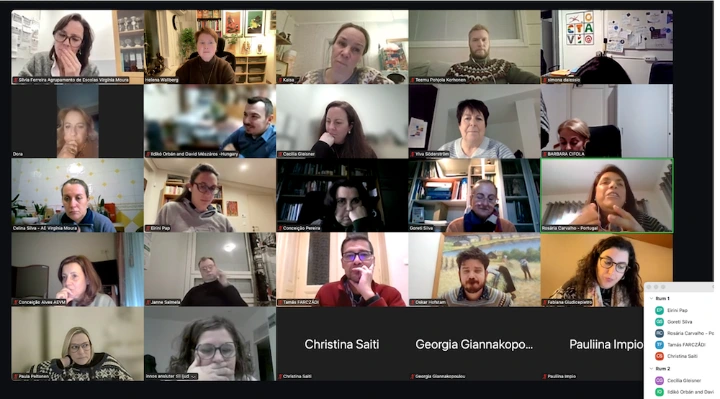
During the fall term, the members of the consortium had collected stories about inclusion in their respective schools. We came together for an online session for a first round of reflection on the stories. This reflection round included the school leaders and the teachers and staff involved in the stories collected. The purpose of the reflection round was to get to know one another and to start trying out the reflection model without imposing a fixed methodology at this stage
We divided the large group into smaller groups to unite in digital group rooms to share:
- What was the difficult or challenging situation like?
- What 3-5 actions were implemented to change the situation?
- What are some of the changes that are visible?
We then reconvened in the main room to reflect on the stories and the answers to the questions above using the questions below:
- Who have benefited from the change and how?
- How is this story significant to schools everywhere?
- What is your main take-away from this reflection round?
Common challenges involved cooperation with parents, teachers, other professionals and with students. There is a need for strategies for managing diverse classrooms, including integrating subjects and involving specialists like psychologists and mediators.
Reflection circle and analysis in Rome, March 18-20 2026
Our first transnational meeting in situ was a visit to the Octavia school in Rome. For this reflection circle we focused on applying the Most Significant Change methodology to our stories. We had the help of a consultant, Andrea Gruber, who is an expert in the MSC method. She led team building exercises in order to build the trust needed for real reflection which involves both challenging thoughts and listening to other perspectives.
Team building
One exercise made us think about which zone we would enter in different situations, such as cooking, driving, meeting new students, talking to parents or challenging colleagues. The comfort zone is where our actions are automatic and we don’t need to think so no learning takes place. The panic zone is where there is no trust or belief that learning is possible and the learning zone is the stretch where thinking and therefore learning thrives. The exercise made us laugh, think and challenge ourselves and each other, a perfect example of the learning zone.
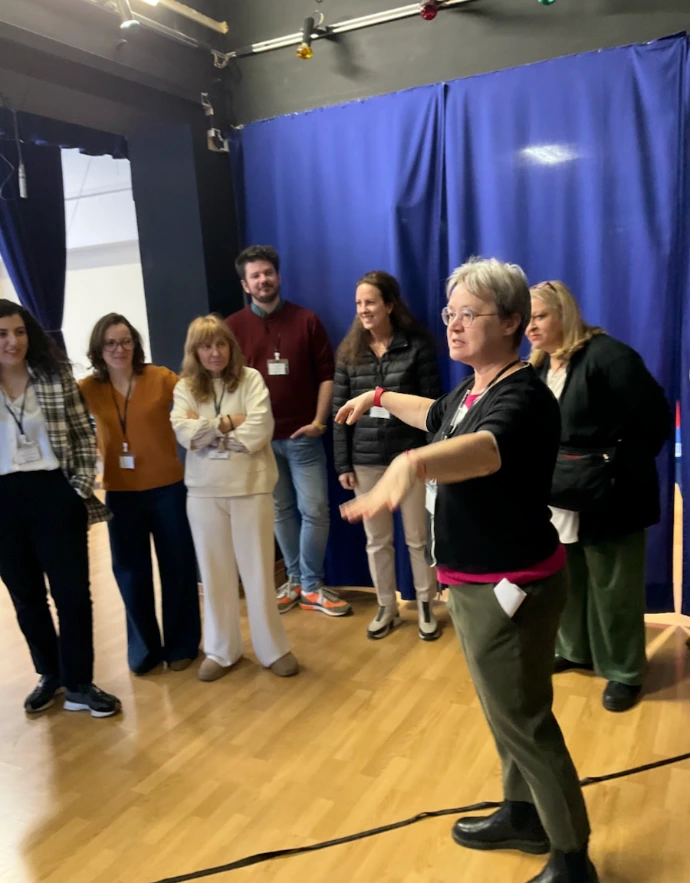 Andrea Gruber builds the team
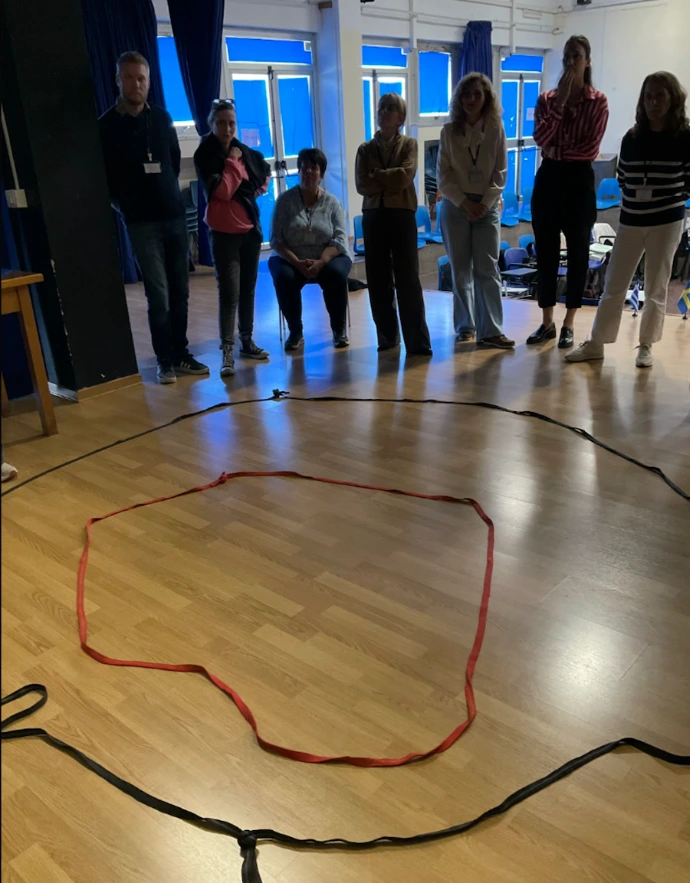 The comfort zone, the learning zone and the panic zone
Understanding Inclusion
Our inclusion stories are told from different perspectives. At the same time our project needs a common ground for the development of inclusion in our schools. We have spent a great deal of time and energy learning about and discussing the concept of inclusion. During the transnational meeting in Rome we learned about the inclusion index written by emeritus professors Mel Ainscow and Tony Booth and the four level of inclusion as expressed by emeritus professor Clas Nilholm and professor Kerstin Göransson.
Reflection Circles Using the MSC Methodology
The next step was to apply the Most Significant Change methodology to our reflections. We wrote our own stories of how our understanding of inclusion had developed from the start of the project. Then we distributed them among us and sat down in circles to read, reflect and analyse the stories. Each reflection circle made a selection of the story that the group believed to illustrate the most significant change. In order to make this selection, each member had to justify their choice which was then reflected on from different perspectives.
This is the template we used for the individual reflection, the basis of the group reflection:
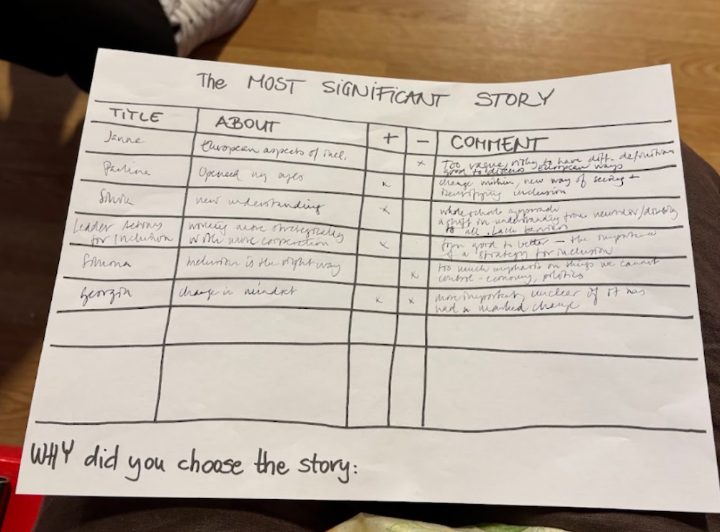
Most Significant Change (MSC) template
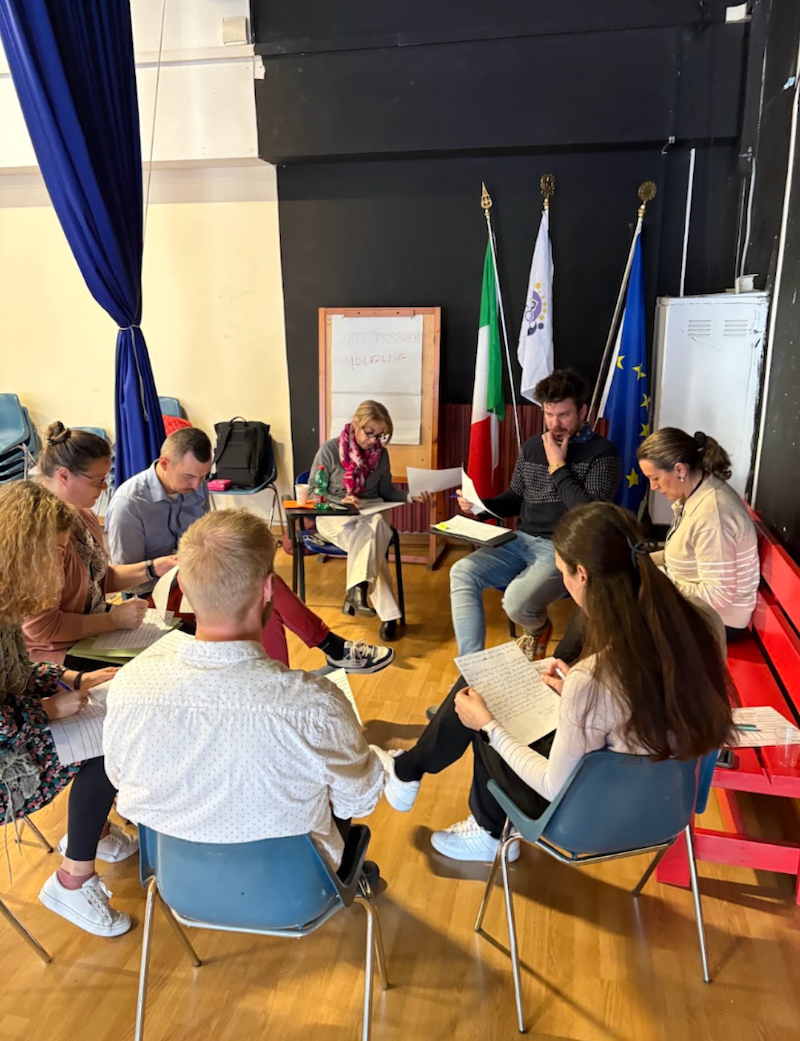
Reflection circle at work
The reflection circles reported back to the whole group on their reflections and their choice of the story that carried the most significant change. A final selection was made with the whole group to identify the story that showed the most significant change. Thus, we applied the MSC methodology in practice in order to be able to use it forward in the project.
Our reflection circles and the team building we did in Rome created a good foundation for the work ahead, resulting in many initiatives to consolidate our project.
Reflection rounds in the schools, March - August 2026
Having practiced reflection circles and analysis in Rome, each school was tasked with organising their own reflection circles and analysis as well as a selection of the most significant changes in their collected stories. They were then asked to write a meta-reflection on the reflection round to pinpoint the change from an individual, group and organisational perspective. The changes that took place for the individual - how did they connect with and affect the group and the teaching? How did that connect with and affect the organisation? These are the instructions given to the schools to aid them in expressing their meta-reflections:
- Who was invited to participate in the reflection? What professions do they have?
- How many actually participated?
- How did you invite participants to the reflection round?
- Where did you meet? For how long? How many times?
- What preparations were made for the reflection?
- How many stories were reflected on?
- What questions or methods were used for the reflection?
- In what way was the MSC method present in your reflection?
- Describe the situation, was it easy to get to the reflection or was it challenging to move from descriptions, discussions to real deep reflections?
- How did you get everyone to share their thoughts?
- What was discovered during the reflection round? Main insights, ideas, revelations?
- How did the reflections affect what teachers did, tried, implemented in their classrooms?
- How did the reflections affect school leadership aspects?
- How did the reflections affect understanding of inclusion in school?
- What else would you like to share about the reflection rounds in your school?
- You can read the meta-reflections in the story section.
Reflection circle and analysis in Athens, October 19-22 2026
Our third reflection round in the consortium takes place in Athens, at the Vrilissia Primary school. The focus of this reflection round is to make a selection of the stories that carry the most significant changes in the most significant domaines of change. The selected stories will be published in the book that will come towards the end of the project, in September 2028.